If you are also looking for information about the apron belly then you are at the right place. This term you might have heard in medical discussions, fitness spaces, or post-pregnancy conversations. It’s not a flattering phrase, but it describes a very real and common body condition that affects people of different ages, body types, and health backgrounds. So, let’s understand more about this condition.
What Is an Apron Belly?
An apron belly which is medically known as a pannus[1] or abdominal panniculus[2], refers to excess fat and skin in the lower abdomen that hangs or folds over the pubic area similar to an apron.
This condition can be different in different people. In some cases, it’s mostly fat. In others, it’s loose skin left behind after weight loss or pregnancy. For many people, it’s a combination of both.
An apron belly is not just a cosmetic concern but in some situations, it can lead to skin irritation, hygiene issues, or physical discomfort.
What Causes an Apron Belly?
There isn’t one single cause. Most of the time, it develops due to a mix of factors.
1. Significant Weight Gain or Obesity
When the body stores excess fat, the abdomen is a common area where it gets collected mostly. Over time, gravity pulls the lower belly downward, creating the apron belly.
2. Major Weight Loss
After losing a large amount of weight, especially when the body loses too much fat instantly, the skin may not fully tighten back. This can leave behind loose, hanging skin in the lower abdomen.
3. Pregnancy
During pregnancy, the abdominal muscles stretch and the skin expands. After delivery, some people are left with excess skin and fat that forms an apron belly, especially after multiple pregnancies.
4. Aging
As we age, skin naturally loses collagen and elasticity. Even without major weight changes, the lower belly may begin to sag.
5. Genetics
Some people are genetically more prone to storing fat in the lower abdominal area or having less skin elasticity.
Symptoms Associated With an Apron Belly
An apron belly doesn’t always cause physical symptoms, but when it does, they may include:
- Skin irritation or rashes in the fold
- Chafing[3] or redness
- Fungal or bacterial skin infections
- Excess sweating and odor
- Lower back discomfort
- Difficulty with hygiene
- Reduced mobility or discomfort during physical activity
In severe cases, persistent skin infections or pain may require medical attention.
Can an Apron Belly Go Away on Its Own?
This depends on what it’s made of.
- If the apron belly is mostly fat, weight loss can reduce its size.
- If it’s mostly loose skin, diet and exercise alone usually won’t fully eliminate it.
- In most real-life cases, it’s a combination of both, which means results vary.
You can’t magically get rid of apron belly overnight and no cream or belt can completely fix this. So, if some random product claims such things, be aware of scams and don’t believe them blindly.
Treatment Options for an Apron Belly
1. Lifestyle Changes
For many people, the first step includes:
- Gradual, sustainable weight loss
- Balanced nutrition
- Regular physical activity
While exercise cannot spot-reduce fat, overall fat loss can significantly reduce the size of an apron belly over time.
2. Strength Training and Core Exercises
Strengthening the core won’t remove loose skin, but it can:
- Improve muscle tone
- Support posture
- Make the abdomen appear firmer
Helpful exercises include:
- Planks
- Dead bugs
- Pelvic tilts[4]
- Modified crunches
These work best when combined with full-body workouts.
3. Skin Care and Hygiene Management
If skin irritation is an issue:
- Keep the area clean and dry
- Use antifungal powders if advised by a doctor
- Wear breathable clothing
- Treat rashes early to prevent infection
This doesn’t remove the apron belly but helps manage discomfort.
4. Non-Surgical Treatments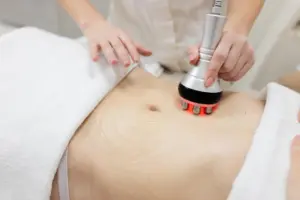
Non-invasive options may help in mild cases:
- Radiofrequency skin tightening[5]
- Ultrasound-based treatments
- Cryolipolysis[6] (fat freezing)
These can offer subtle improvement, but results are limited and vary from person to person.
5. Surgical Treatment Options
When the apron belly causes physical problems or doesn’t improve with lifestyle changes, surgery may be considered. Such surgeries include Panniculectomy and abdominoplasty which helps in:
- Removes excess skin and fat
- Focuses on function and comfort, not cosmetic shaping
- Sometimes covered by insurance if medically necessary
- Tightens abdominal muscles
Make sure a board-certified surgeon is chosen for the surgery to make it safe.
You can also read FUPA: Causes, Treatments, Exercises, and How to Get Rid of It to understand different ways to reduce fat in the lower abdominal area.
Final Thoughts
An apron belly is a common condition, which can be seen in many people. Don’t compare yourself with others because body conditions are temporary which can be cured with lifestyle changes. If you ever feel insecure about your looks, then do remember that every body type is beautiful and is cherished. You are unique and that’s your identity.
FAQs
Q1. Is an apron belly the same as belly fat?
Not always. It often includes loose skin as well as fat.
Q2. Can exercise completely remove an apron belly?
Exercise helps reduce fat and improve tone, but it cannot remove excess skin.
Q3. Is surgery the only permanent solution?
For significant loose skin, yes. Fat loss alone may not be enough.
Q4. Is an apron belly dangerous?
Not usually, but it can cause skin infections, discomfort, and mobility issues if severe.
Q5. Should I see a doctor?
If you experience pain, repeated rashes, or infections, medical advice is recommended.
For a detailed look at surgical fat removal methods, including results and recovery, read Liposculpture Liposuction: Procedure, Benefits, Recovery & Results.
References
We value truthful content. 6 sources were referenced during research to write this content.
- (n.d.). Pannus - Wikipedia. Retrieved from https://en.wikipedia.org/wiki/Pannus
- Cunningham, S. C., & Klein, R. V. (2007, April). Nomenclature Question: Panniculus or Pannus? Answer: Pannona. Journal of the American College of Surgeons. Ovid Technologies (Wolters Kluwer Health). http://doi.org/10.1016/j.jamcollsurg.2007.01.027
- (n.d.). Chafing (skin) - Wikipedia. Retrieved from https://en.wikipedia.org/wiki/Chafing_(skin)
- Poitout, D. G. (Ed.). (2016). Biomechanics and Biomaterials in Orthopedics. (D. G. Poitout, Ed.), []. Springer London. http://doi.org/10.1007/978-1-84882-664-9
- Alexiades-Armenakas, M., Rosenberg, D., Renton, B., Dover, J., & Arndt, K. (2010, April 1). Blinded, Randomized, Quantitative Grading Comparison of Minimally Invasive, Fractional Radiofrequency and Surgical Face-lift to Treat Skin Laxity. Archives of Dermatology. American Medical Association (AMA). http://doi.org/10.1001/archdermatol.2010.24
- Kania, B., & Goldberg, D. J. (2023, November). Cryolipolysis: A promising nonsurgical technique for localized fat reduction. Journal of Cosmetic Dermatology. Wiley. http://doi.org/10.1111/jocd.16039