Liposuction has been around for decades, but liposculpture takes things a step further. Instead of just removing fat, liposculpture liposuction focuses on shaping and contouring the body. The goal isn’t weight loss but it’s refinement.
If you’ve ever wondered how some people achieve more defined waists, smoother contours, or sculpted areas that diet and exercise don’t seem to touch, liposculpture may be the reason. Let’s break down what it actually is, how it works, who it’s for, and what to realistically expect.
What Is Liposculpture and Liposuction?
Liposculpture[1] and liposuction is an advanced cosmetic procedure designed to remove small to moderate amounts of fat with precision, making your natural body contours look good rather than simply reducing size.
Unlike traditional liposuction[1], which focuses on bulk fat removal, liposculpture:
- Targets specific fat pockets
- Emphasizes body symmetry and definition
- Often uses smaller cannulas for more controlled results
It’s commonly used to contour areas like the abdomen, waist, thighs, arms, back, chin, and even knees.
How Is Liposculpture Different From Traditional Liposuction?
The key difference lies in intent and technique.
Traditional liposuction:
- Removes larger volumes of fat
- Focuses on size reduction
Liposculpture:
- Removes fat strategically
- Enhances muscle definition and natural curves
- Requires a higher level of surgical precision
In some cases, fat removed during liposculpture may also be reused for fat transfer procedures (such as subtle contour enhancement in other areas).
Liposculpture Liposuction Procedure: Step by Step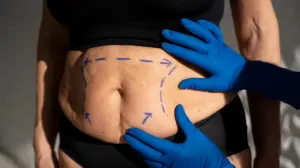
The procedure usually follows these stages:
1. Consultation and Planning
Your surgeon assesses:
- Body structure
- Fat distribution
- Skin elasticity
- Desired outcome
A customized sculpting plan is created based on your anatomy not trends.
2. Anesthesia
Depending on the area and amount of fat removed, liposculpture may be performed under:
- Local anesthesia
- Tumescent anesthesia[2]
- General anesthesia
3. Fat Removal
Small incisions[3] are made, and thin cannulas are used to gently break up and suction fat while maintaining smooth contours.
4. Sculpting and Refinement
This is where liposculpture stands out. Fat removal is carefully controlled to enhance natural lines and proportions rather than flatten the area.
The procedure usually takes 1-3 hours, depending on the treated areas.
Benefits of Liposculpture and Liposuction
Liposculpture offers several advantages when done on the right candidate:
- More natural-looking results
- Improved body symmetry
- Enhanced muscle definition
- Smaller incisions and minimal scarring
- Long-lasting fat reduction in treated areas
It’s especially helpful for people who are close to their ideal weight but struggle with stubborn fat pockets.
Who Is a Good Candidate?
You may be a good candidate if:
- You are in generally good health
- Your weight is stable
- You have good skin elasticity
- You have localized fat resistant to diet and exercise
- You have realistic expectations
Liposculpture is not a weight-loss procedure and is not recommended for significant obesity.
Recovery After Liposculpture and Liposuction
Recovery is usually smoother than traditional liposuction, but it still requires care.
What to Expect:
- Swelling and bruising for 1-3 weeks
- Mild discomfort or soreness
- Compression garments worn for several weeks
Timeline:
- Most people return to light activities within 3-7 days
- Exercise can usually resume after 3-4 weeks
- Final results become visible as swelling subsides, often by 2-3 months
Following post-procedure instructions closely plays a big role in the final outcome.
Liposculpture Results: What’s Realistic?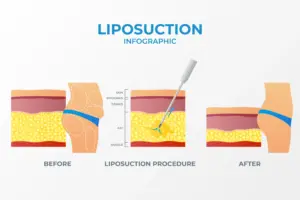
Results are not immediate. Swelling can temporarily hide definition.
Once healed, patients typically notice:
- More defined contours
- Improved body proportions
- Permanent fat reduction in treated areas
However, remaining fat cells can still expand with weight gain, so maintaining a healthy lifestyle is essential to preserve results.
For a deeper understanding of how fat accumulation happens in the lower abdomen and how to reduce it, you can also read FUPA: Causes, Treatments, Exercises, and How to Get Rid of It.
Possible Risks and Side Effects
As with any surgical procedure, liposculpture carries some risks, including:
- Infection
- Uneven contours
- Temporary numbness
- Fluid buildup
- Scarring (usually minimal)
Choosing a qualified, experienced, board-certified surgeon significantly reduces these risks.
Final Thoughts
Liposculpture liposuction isn’t about changing who you are, it’s about refining what’s already there. When done for the right reasons and on the right candidate, it can offer subtle yet powerful improvements that diet and exercise alone can’t always achieve. That said, it’s not a shortcut to fitness or health. The best results come when liposculpture is paired with long-term healthy habits and realistic expectations. If you’re considering the procedure, a thorough consultation with a trusted professional is the most important first step.
FAQs
Q1. Is liposculpture the same as liposuction?
Not exactly. While both remove fat, liposculpture focuses on precision shaping and contouring, not just fat reduction. The goal is definition and balance rather than volume loss alone.
Q2. How much fat can be removed with liposculpture?
Liposculpture removes small to moderate amounts of fat. It’s designed for refining contours, not for large-volume fat removal or weight loss.
Q3. Does liposculpture help with weight loss?
No. Liposculpture is not a weight-loss procedure. It’s meant to target stubborn fat pockets in people who are already close to their ideal weight.
Q4. Are the results permanent?
Yes, the fat cells removed are gone permanently. However, remaining fat cells can expand if you gain weight, so maintaining a stable weight is key to long-lasting results.
You can also read: What Is an Apron Belly? Causes, Symptoms & Treatment Options
References
We value truthful content. 3 sources were referenced during research to write this content.
- Dixit, V., & Wagh, M. (2013). Unfavourable outcomes of liposuction and their management. Indian Journal of Plastic Surgery. Georg Thieme Verlag KG. http://doi.org/10.4103/0970-0358.118617
- De Jong, R. H. (2002, March). Tumescent Anesthesia: Lidocaine Dosing Dichotomy. International Journal of Cosmetic Surgery and Aesthetic Dermatology. Mary Ann Liebert Inc. http://doi.org/10.1089/153082002320007412
- (n.d.). Incision - Wikipedia. Retrieved from https://en.wikipedia.org/wiki/Incision