Ivermectin is known to be the best antiparasitic medication that has important applications in dermatology in both topical and oral forms. Basically, it is made to treat parasitic infections, and its useful in treating skin conditions that happens because of electroparasites and also reduce the inflammation caused by them.
What is Ivermectin?
Ivermectin[1] belongs to the class of macrocyclic lactones which is a compound derived from Streptomyces avermitilis[2]. It is helpful in fighting against parasitic worms and arthropods[3] by binding to glutamate-gated chloride channels in parasites, causing paralysis and death. The drug has decades of clinical use in humans and animals, with a strong safety profile when used appropriately.
Approved and Common Dermatologic Uses
A. Papulopustular Rosacea (Topical Ivermectin)
Topical ivermectin cream (1%) is FDA-approved for treating inflammatory lesions of papulopustular rosacea[4], a chronic inflammatory condition of the face characterized by redness and acne-like bumps.
- Mechanism: Acts against Demodex[5] mites (microscopic skin mites implicated in rosacea) and has anti-inflammatory effects on skin.
- Clinical evidence: Two pivotal Phase III randomised trials showed significant reduction in lesions and symptom scores compared with placebo[6].
B. Scabies (Oral and Topical)
Scabies[7] is a skin infestation caused by the Sarcoptes scabiei[8] mite.
- Oral ivermectin is commonly used especially in widespread or crusted scabies and aids treatment when topical therapy is impractical or has failed.
- Evidence suggests topical and oral ivermectin have similar adverse event profiles, though their efficacy may differ based on formulation and case severity.
C. Head Lice (Topical Ivermectin)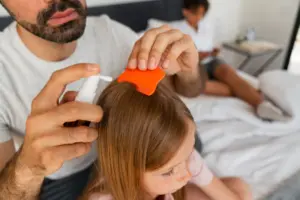
Topical ivermectin 0.5% lotion is a recognized treatment for head lice[9] infestations. It kills lice and may facilitate easier removal without extensive combing.
D. Demodicosis and Other Mite-Related Conditions
Ivermectin either topical or oral is used off-label for skin conditions involving Demodex mites (e.g., demodicosis) and can be effective in reducing mite density and related inflammation.
How Ivermectin Works in Skin Conditions
Anti-Parasitic Action
Ivermectin paralyzes and kills parasitic mites and lice by increasing chloride ion influx in their nerve and muscle cells, a mechanism not present in humans.
Anti-Inflammatory Effects
Beyond parasitic control, ivermectin may reduce inflammatory cytokines[10] in the skin, benefiting inflammatory dermatoses such as rosacea.
Benefits of Ivermectin in Dermatology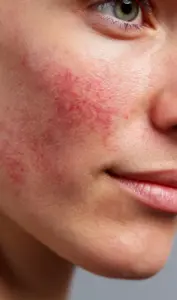
Efficacy
- Rosacea: Demonstrated efficacy with significant reductions in inflammatory lesions and improved quality of life.
- Scabies: Effective in many clinical situations, including difficult or resistant cases, often with clearer skin and symptom relief.
- Head lice: High rates of success with topical applications.
Safety Profile
- Systemic absorption of topical ivermectin is low, reducing the risk of systemic side effects.
- Long-term use has been broadly safe over decades of therapeutic use.
For a complete overview of safe and effective Perioral Dermatitis Treatment Options: What Actually Works to Heal the Rash, including when to use prescription creams like ivermectin, see our detailed guide.
Precautions and Side Effects
Local Skin Reactions (Topical Use)
- Burning sensation
- Mild irritation
- Dry skin
These are generally mild and transient.
Systemic Effects (Oral Use)
Oral ivermectin side effects are rare but can include:
- Nausea or dizziness
- Mild gastrointestinal discomfort
- Skin rash or allergy (rare)
Special Populations
- Children & infants: Safety and effectiveness not well established for rosacea; usage decisions should be clinician-guided.
- Pregnancy & breastfeeding: Use only when benefits outweigh risks and under healthcare supervision.
Important Safety Notes
- Ivermectin formulations designed for animals (e.g. horse paste) are not safe or appropriate for human use.
- Always follow medical prescription and guidance from a healthcare provider.
Final Thoughts
Ivermectin is a well-established medication for treating parasitic conditions or any other skin problem. You can take it and have your skin condition treated but make sure you take it with proper guidance. It is recommended that you only take the medicine when recommended by a healthcare professional. Don’t become a doctor at home when you are not and get proper guidance in each condition. As, it will help you to prevent future complications.
For viral skin infections like shingles, you can also read our detailed guide on Herpes Zoster Treatment: Everything You Need to Know About Shingles.
References
We value truthful content. 10 sources were referenced during research to write this content.
- Kern, C., Müller, P., Chaccour, C., Liechti, M. E., Hammann, F., & Duthaler, U. (2023, June 24). Pharmacokinetics of ivermectin metabolites and their activity against Anopheles stephensi mosquitoes. Malaria Journal. Springer Science and Business Media LLC. http://doi.org/10.1186/s12936-023-04624-0
- Burg, R. W., Miller, B. M., Baker, E. E., Birnbaum, J., Currie, S. A., Hartman, R., … Ōmura, S. (1979, March). Avermectins, New Family of Potent Anthelmintic Agents: Producing Organism and Fermentation. Antimicrobial Agents and Chemotherapy. American Society for Microbiology. http://doi.org/10.1128/aac.15.3.361
- Martínez-Muñoz, C. A. (2023, May 4). The correct authorship of Arthropoda—A reappraisal. Integrative Systematics: Stuttgart Contributions to Natural History. Stuttgart State Museum of Natural History. http://doi.org/10.18476/2023.472723
- Sand, M., Sand, D., Thrandorf, C., Paech, V., Altmeyer, P., & Bechara, F. G. (2010, June 4). Cutaneous lesions of the nose. Head & Face Medicine. Springer Science and Business Media LLC. http://doi.org/10.1186/1746-160x-6-7
- Rather, P., & Hassan, I. (2014). Human Demodex Mite: The Versatile Mite of Dermatological Importance. Indian Journal of Dermatology. Ovid Technologies (Wolters Kluwer Health). http://doi.org/10.4103/0019-5154.123498
- Ashar, Y. K., Chang, L. J., & Wager, T. D. (2017, May 8). Brain Mechanisms of the Placebo Effect: An Affective Appraisal Account. Annual Review of Clinical Psychology. Annual Reviews. http://doi.org/10.1146/annurev-clinpsy-021815-093015
- Vos, T., Allen, C., Arora, M., Barber, R. M., Bhutta, Z. A., Brown, A., … Murray, C. J. L. (2016, October). Global, regional, and national incidence, prevalence, and years lived with disability for 310 diseases and injuries, 1990–2015: a systematic analysis for the Global Burden of Disease Study 2015. The Lancet. Elsevier BV. http://doi.org/10.1016/s0140-6736(16)31678-6
- Middleton, J., Cassell, J. A., & Walker, S. L. (2023). Scabies Management in Institutions. Scabies. Springer International Publishing. http://doi.org/10.1007/978-3-031-26070-4_29
- Kittler, R., Kayser, M., & Stoneking, M. (2003, August). Molecular Evolution of Pediculus humanus and the Origin of Clothing. Current Biology. Elsevier BV. http://doi.org/10.1016/s0960-9822(03)00507-4
- Leonard, W. J. (2001, December). Cytokines and immunodeficiency diseases. Nature Reviews Immunology. Springer Science and Business Media LLC. http://doi.org/10.1038/35105066