
Herpes zoster which is also termed as shingles, is a virus that causes viral infection in the body with other symptoms. You might have experienced chicken pox in childhood that is caused by varicella-zoster virus (VZV) which is the same virus responsible for Herpes zoster. Let’s understand it in simple words, when your chicken pox finally recovers completely, the virus still stays in for a longer period of time and can get activated when your immune system loses control. Shingles can happen to anyone, so understanding how it develops, its stages, symptoms and treatment options can be helpful to overcome the pain and complications caused by herpes zoster.
What Is Herpes Zoster and Why Does It Occur?
When a person recovers from chickenpox, the varicella-zoster virus[1] becomes inactive (quiescent) and stays in the sensory ganglia[2], which are clusters of nerve cells responsible for transmitting sensations such as pain and touch. Similarly, the immune system helps in keeping this virus suppressed. However, during the immunity weakened of a person, this virus gets active and travels along the affected sensory nerve to the skin, causing shingle rash, pain and inflammation.
Is Herpes Zoster Contagious?
It is recommended to not come in direct contact with the person affected with herpes zoster and in most cases it is also advised to keep the personal things such as bedding and clothes separate from others. As other people with weakened immune systems, young children and pregnant women can catch this virus faster. Moreover, avoid touching fluid filled blisters or scratching them, because after popping the fluid will spread and new blisters will pop up in the same place.
This is why it is important to:
- Avoid touching or scratching blisters
- Keep the rash covered
- Maintain proper hygiene
Popping blisters can worsen pain, delay healing, and increase the risk of infection.
Common Areas Affected by Herpes Zoster
Herpes zoster usually affects one side of the body, following the path of a single nerve (dermatome[3]). Common locations include:
- Chest, ribs, and back (most common)
- Neck and shoulder
- One side of the face
Medical note: Shingles involving the eye, mouth, or face is considered a medical emergency, as it can lead to vision loss or serious neurological complications.
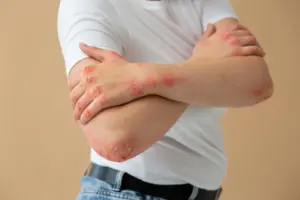
Clinical Phases of Herpes Zoster
There are typically three phases of Herpes Zoster.
1. Pre-eruptive Phase:
This is the early phase which starts 1 to 3 days before the rashes appear. In this phase, the virus becomes active in the sensory ganglion, causing nerve inflammation. Pain signals are sent to the brain even though no skin changes are visible.
Common symptoms include:
- Burning, stabbing, or tingling pain on one side of the body
- Numbness or itching
- Headache and body aches
- Fatigue
- Mild fever
- Light sensitivity
- Occasionally diarrhea
2. Acute Eruptive Phase:
This is the active phase when the shingles rash becomes visible. The red patches appear with clear fluid-filled blisters (vesicles).
Key features:
- Rash develops fully within 3 to 5 days
- Severe pain, even with light touch or clothing
- Fever, fatigue, and headache
- Blisters rupture, form sores, then dry and scab
- Scabs usually fall off within 10 to 15 days in people with normal immunity
Individuals with weakened immunity such as those with cancer, HIV/AIDS, or undergoing chemotherapy can experience the severe rash, spread more widely, and take longer to heal.
3. Chronic Phase:
After the rash heals, some people continue to experience pain which means the virus is still in the body.
Symptoms may include:
- Burning or shooting pain
- Tingling or electric-shock sensations
- Pain lasting months or, in rare cases, years
This condition is known as postherpetic neuralgia[4] and is more common in elderly citizens.
Causes and Risk Factors
Herpes zoster occurs due to reactivation of dormant VZV. Factors that increase the risk include:
- Age above 50 years
- Weak immune system
- Chronic stress
- Sleep deprivation
- HIV/AIDS
- Cancer
- Chemotherapy or steroid therapy
- Organ transplantation
Anyone who has had chickenpox can develop shingles later in life.
Treatment of Herpes Zoster
- Antiviral Medications: Medications prescribed by a doctor can be helpful to treat the pain and complications. Take the help of a doctor within 48-72 hours after the virus starts occurring.
- Pain Management: Doctor might prescribe you with a pain reliever like paracetamol in case of severe pain. You can also ask them for other medications for nerve pain if needed.
- Antibiotics: Prescribed only if a secondary bacterial infection develops. Immediate medical attention is essential if shingles affect the eyes, face, or ears.
Vaccination and Prevention 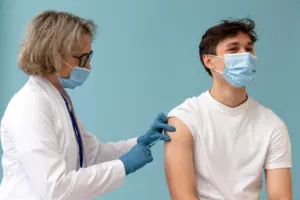
Vaccination is the most effective way to prevent shingles.
- Recombinant Zoster Vaccine (RZV – Shingrix): It is a non-live vaccine, having two doses and should be taken 2-6 months apart. It is recommended for people aged 50 years or above. For adults aged 18 or above they can have two doses of vaccine 2-3 months apart. These doses are helpful in providing long-term protection and reduces the risk of postherpetic neuralgia.
- Zoster vaccine live (ZVL) is a live a vaccine and the recommended dosage is one dose. ZVL is a vaccine that is found helpful to treat the complications and risks of herpes virus in the elder people of 50-59 years.
Important Facts
According to the World Health Organization[5]:
- Billions of people worldwide are infected with herpes viruses
- Many infections remain asymptomatic but can reactivate later
- Early treatment and vaccination significantly reduce complications
Final Takeaway
Herpes zoster is not a new infection, but a reactivation of a virus that has remained dormant in the body since chickenpox. Early recognition, prompt treatment, and vaccination are key to preventing severe pain, complications, and long-term nerve damage.
Medical Disclaimer: This article is for informational purposes only and does not replace professional medical advice, diagnosis, or treatment. Always consult a qualified healthcare provider.
FAQs
Q1: Can herpes zoster occur more than once?
Yes. Although herpes zoster usually occurs once, it can recur, especially in people with weakened immune systems, chronic illnesses, or advanced age. Vaccination significantly lowers the risk of recurrence.
Q2: How long does shingles pain usually last?
The acute pain typically lasts 2 to 4 weeks, resolving as the rash heals. However, in some individuals, especially in elderly people pain may persist for months or longer.
Q3: Are shingles dangerous?
Shingles is usually manageable, but it can become serious if it affects the eyes, face, or nervous system.
Q4: Can a person with shingles spread the infection?
A person with shingles can transmit the virus to those with low immunity, elderly people, young children, and pregnant women.
You can also read: White Spots in The Skin[6]
References
We value truthful content. 6 sources were referenced during research to write this content.
- Nagel, M. A., & Gilden, D. H. (2007, July 1). The protean neurologic manifestations of varicella-zoster virus infection. Cleveland Clinic Journal of Medicine. Cleveland Clinic Journal of Medicine. http://doi.org/10.3949/ccjm.74.7.489
- Huang, C.-W., Tzeng, J.-N., Chen, Y.-J., Tsai, W.-F., Chen, C.-C., & Sun, W.-H. (2007, October). Nociceptors of dorsal root ganglion express proton-sensing G-protein-coupled receptors. Molecular and Cellular Neuroscience. Elsevier BV. http://doi.org/10.1016/j.mcn.2007.06.010
- Meuwly, D. (2013, December 4). Friction Ridge Skin—Automated Fingerprint Identification System (AFIS). Wiley Encyclopedia of Forensic Science. Wiley. http://doi.org/10.1002/9780470061589.fsa359.pub2
- Johnson, R. W., & Rice, A. S. C. (2014, October 16). Postherpetic Neuralgia. (C. G. Solomon, Ed.), New England Journal of Medicine. Massachusetts Medical Society. http://doi.org/10.1056/nejmcp1403062
- Harfouche, M., AlMukdad, S., Alareeki, A., Osman, A. M. M., Gottlieb, S., Rowley, J., … Looker, K. J. (2024, December 10). Estimated global and regional incidence and prevalence of herpes simplex virus infections and genital ulcer disease in 2020: mathematical modelling analyses. Sexually Transmitted Infections. BMJ. http://doi.org/10.1136/sextrans-2024-056307
- (n.d.). White Spots in The Skin: Causes And Treatments – HealthFisher. Retrieved from https://healthfisher.org/white-spots-in-the-skin-causes-and-treatments