You might have heard the term “FUPA” thrown around on Tik-Tok, Instagram, YouTube, or in gym conversations but what does it actually mean? And more importantly, can you really get rid of it? Let’s break it down and understand the term in depth. So, next time you hear this term you don’t stand there but instead add your points as well and share ways to get rid of it.
What Does FUPA Stand For?
“FUPA” is an informal term often used as a short form that actually stands for Fatty Upper Pubic Area. It’s not a medical term, but people use it to describe the layer of fat (and sometimes loose skin) that sits just above the pubic bone[1] which is right below your lower belly. Medically, this region of fat and skin can be part of what’s called a panniculus[2] which is basically a thicker layer of subcutaneous fat or tissue in the lower abdomen.
Causes of a FUPA
Let’s know some reason that can cause FUPA in the body:
1. Body Fat Distribution
When you gain overall body fat, the upper pubic area is just one place it can accumulate. Everyone’s body stores fat differently, and for some people, this region is simply where fat settles.
2. Genetics
Some people are genetically prone to store more fat in the lower belly and above the pubic area, no matter their diet or workouts. So, this is something you can inherit from your parents as well.
3. Pregnancy and Postpartum
After childbirth, there are many changes that occur in women’s body such as muscle stretching, hormonal changes happen, and fat distribution shifts, sometimes leaving that lower belly pouch more noticeable.
4. Aging
As we age, metabolism slows and fat redistribution changes. Even if you’ve been active all your life, the body may hold fat differently over time.
5. Weight Loss After Being Overweight
If you lose a lot of weight quickly, sometimes the skin and fat in the lower belly don’t tighten fully, making the area appear more prominent.
6. Weak Core or Posture Issues
Weak deep abdominal muscles and a forward-tilted pelvis[3] can make the lower belly pouch look larger than it actually is visually.
Can You Spot Reduce a FUPA With Exercise?
You cannot reduce FUPA with exercise because melting fat from one part of your body cannot be achieved by exercise alone. This is important to know that your body doesn’t burn fat from one area just because you train that part. That’s called “spot reduction[4],” and science says it simply doesn’t work. But don’t lose hope because exercise helps by:
- Strengthening the underlying muscles so your midsection looks tighter and more toned
- Burning calories to help reduce overall body fat
- Improving posture so the lower belly looks flatter
So, only doing exercise will not help you to reduce FUPA but having a proper balanced diet with exercise might help you to get your dream body.
Best Natural Ways to Reduce a FUPA
If you are looking for natural ways to get rid of that fat stored in your lower abdomen or wants to make it flatter naturally then here you go:
1. Focus on Overall Fat Loss
If you focus more on overall body weight rather than particular area then you might see the results needed in all stubborn areas including above the pubic region. Having a meal less in calories will help you fast in fat loss.
That means eat:
- More whole foods
- Fewer processed foods and added sugars
- Plenty of protein and fiber
- Drinking enough water
- Moderate calorie monitoring (without extreme dieting)
2. Cardio Workouts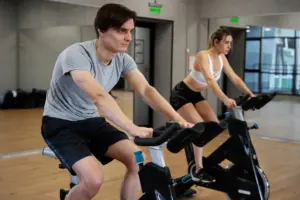
Cardio activities speed up calorie burn which helps reduce fat over time. Great options include:
- Brisk walking or running
- Cycling
- Swimming
- HIIT[5] (High-Intensity Interval Training)
Try to do these exercises for at least 150 minutes per week to notice results.
3. Strength Training
Building lean muscle boosts your metabolism and helps your body burn more calories even at rest. Exercises which will help you in the ft loss process include:
- Squats
- Lunges[6]
- Deadlifts
- Rows
- Push-ups
4. Core and Deep Ab Exercises 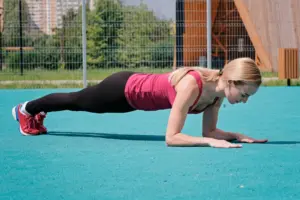
These won’t burn fat by themselves, but they tone and tighten the underlying muscles making your lower belly area appear flatter and firmer.
Some effective moves:
- Planks
- Reverse Crunches
- Leg Raises
- Dead Bug
- Bird Dog[7]
These exercises help strengthen the deep core and pelvis stabilizers that support your posture and appearance.
5. Improve Posture
A slouched lower back or weak pelvic floor can exaggerate the appearance of a lower belly pouch, even if your body fat is low. Simple posture work can make a noticeable difference.
Medical and Cosmetic Options
If diet and training aren’t giving you the results you want, there are medical options:
1. Non-Surgical Choices: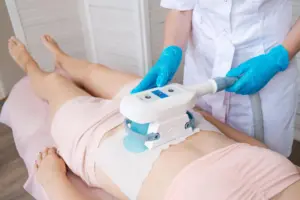
It includes freezing and killing of fat cells which will make your body lose weight and this practice is known as CoolSculpting (cryolipolysis[8]).
2. Surgical Options:
There are many options that can give you immediate results through surgery like:
- Liposuction:[9] Removes excess fat from the area.
- Monsplasty (pubic lift): Removes fat and loose skin from the pubic mound.
- Abdominoplasty[10] (tummy tuck): Removes fat and loose skin from the whole abdomen.
These options should be considered only after lifestyle changes, and only with a qualified, board-certified doctor.
Final Thought
FUPA is normal and many people have it, and it doesn’t mean you’re unhealthy. You can’t magically get rid of it just because you don’t like it with just sit-ups or crunches. The combination of diet, cardio, strength training and core work is the key to lose fat over time. But if you are looking for surgery options for immediate results than there are many in the market but remember they are not a replacement for healthy lifestyle. You just need some patience to see results.
FAQs
1. Is FUPA normal?
Yes, completely. A FUPA is very common in both men and women. It’s simply a natural area where the body tends to store fat and, in some cases, loose skin. Having a FUPA does not mean you’re unhealthy or out of shape.
2. Can thin or fit people have a FUPA?
Absolutely. Even people with low body fat or visible abs can have a small FUPA due to genetics, hormones, posture, or skin elasticity. Body composition varies from person to person.
3. How long does it take to reduce a FUPA naturally?
There’s no fixed timeline. With consistent nutrition, exercise, and lifestyle habits, noticeable changes can take weeks to months. Stubborn fat areas often respond slower than others, so patience is key.
4. Do crunches or sit-ups help reduce FUPA?
Crunches and sit-ups strengthen abdominal muscles but do not directly burn fat from the FUPA area. They’re helpful for toning and posture, but overall fat loss comes from a calorie deficit and full-body training.
You can also read: What Does BBL Mean? Everything You Need to Know[11] for a complete guide to popular body shaping procedures.
References
We value truthful content. 11 sources were referenced during research to write this content.
- White, T. D. (1989, August). An analysis of epipubic bone function in mammals using scaling theory. Journal of Theoretical Biology. Elsevier BV. http://doi.org/10.1016/s0022-5193(89)80213-9
- Cunningham, S. C., & Klein, R. V. (2007, April). Nomenclature Question: Panniculus or Pannus? Answer: Pannona. Journal of the American College of Surgeons. Ovid Technologies (Wolters Kluwer Health). http://doi.org/10.1016/j.jamcollsurg.2007.01.027
- Betti, L. (2017, March 15). Human Variation in Pelvic Shape and the Effects of Climate and Past Population History. The Anatomical Record. Wiley. http://doi.org/10.1002/ar.23542
- Vispute, S. S., Smith, J. D., LeCheminant, J. D., & Hurley, K. S. (2011, September). The Effect of Abdominal Exercise on Abdominal Fat. Journal of Strength and Conditioning Research. Ovid Technologies (Wolters Kluwer Health). http://doi.org/10.1519/jsc.0b013e3181fb4a46
- TABATA, I., NISHIMURA, K., KOUZAKI, M., HIRAI, Y., OGITA, F., MIYACHI, M., & YAMAMOTO, K. (1996, October). Effects of moderate-intensity endurance and high-intensity intermittent training on anaerobic capacity and ??VO2max. Medicine & Science in Sports & Exercise. Ovid Technologies (Wolters Kluwer Health). http://doi.org/10.1097/00005768-199610000-00018
- (n.d.). Lunge (exercise) - Wikipedia. Retrieved from https://en.wikipedia.org/wiki/Lunge_(exercise)
- Lawrence, M. A., Chin, A., & Swanson, B. T. (2019, August). Biomechanical Comparison of the Reverse Hyperextension Machine and the Hyperextension Exercise. Journal of Strength and Conditioning Research. Ovid Technologies (Wolters Kluwer Health). http://doi.org/10.1519/jsc.0000000000003146
- Kania, B., & Goldberg, D. J. (2023, November). Cryolipolysis: A promising nonsurgical technique for localized fat reduction. Journal of Cosmetic Dermatology. Wiley. http://doi.org/10.1111/jocd.16039
- Dixit, V., & Wagh, M. (2013). Unfavourable outcomes of liposuction and their management. Indian Journal of Plastic Surgery. Georg Thieme Verlag KG. http://doi.org/10.4103/0970-0358.118617
- Louri, N. A., Ammar, H. M., Abdulkariml, F. A., Alkhaldi, T. A. S. A. E., & AlHasan, R. N. (2020, January 2). Abdominoplasty: Pitfalls and Prospects. Obesity Surgery. Springer Science and Business Media LLC. http://doi.org/10.1007/s11695-019-04367-5
- Gonzalez, R. (2004, December). Augmentation Gluteoplasty: The XYZ Method. Aesthetic Plastic Surgery. Springer Science and Business Media LLC. http://doi.org/10.1007/s00266-004-3130-6