
Antral gastritis can be defined by the inflammation occurring in the antrum which is the lower part of the stomach that connects to the small intestine. This antrum plays an important role in grinding food and helping in making the stomach empty.
In simple words, antral gastritis means irritation or swelling of the stomach lining limited to the antral region.
This condition develops when the stomach’s protective mucosal layer weakens, allowing acid and digestive enzymes to irritate the stomach wall.
How Antral Gastritis Is Different From Other Stomach Conditions
Antral gastritis[1] is often confused with acidity, gas, or irritable bowel syndrome[2] (IBS). However, these conditions are different because IBS affects bowel movement and intestinal function whereas antral gastritis causes actual inflammation of the stomach lining, which can be examined by doing medical tests like endoscopy[4]. Although symptoms of antral gastritis and IBS are different, they both affect the abdomen.
Causes of Antral gastritis
Antral gastritis can happen due to multiple factors, including:
- Helicobacter pylori[5] (H. pylori) infection
- Long-term use of painkillers
- Excessive alcohol consumption
- Chronic stress
- Smoking
- Reduced blood flow to the stomach lining
- Viral or bacterial infections
Among these, H. pylori infection is the most common cause of chronic antral gastritis worldwide.
Types of Antral Gastritis
Let’s understand the different types of antral gastritis to know the condition in depth.
Acute Antral Gastritis
Acute antral gastritis is a sudden and temporary inflammation happening in the stomach lining[3]. It can be due to stress, consumption of alcohol, use of medications and viral infections like enteroviruses.
You might face symptoms like:
- Burning or aching pain in the upper abdomen
- Nausea or vomiting
- Indigestion
- Temporary loss of appetite
These symptoms are for a short period of time which can be solved by knowing the cause and treating it accordingly.
Chronic Antral Gastritis
Chronic antral gastritis develops gradually over time and may last for years if left untreated. In this condition, the infection usually starts as non-atrophic gastritis and if it is not treated on time it might progress to atrophic gastritis. The long term infection might cause ulcers and other complications in the body.
So, it becomes important to detect the cause and prevent the disease from progressing further.
Let’s understand non-atrophic antral gastritis and atrophic antral gastritis
In non-atrophic antral gastritis the stomach lining is inflamed, glandular structure remains intact and acid secretion can be normal or increased. This stage can be cured with proper treatment.
Atrophic Antral Gastritis
Atrophic antral gastritis[7] is a more advanced condition where the gastric glands[8] deteriorate. The stomach lining becomes thinner and the digestive system may face problems in digesting and absorbing.
This form carries a higher risk of long-term complications.
Autoimmune Factors and Antral Gastritis
Autoimmune gastritis mainly affects the body of the stomach, but antral involvement may be seen in certain cases.
It is characterized by:
- Immune-mediated chronic inflammation
- Presence of antibodies against stomach cells
- Progressive mucosal[9] damage
The relationship between autoimmune gastritis and H. pylori infection remains unclear, and further research is ongoing.
Why Antral Gastritis Should Not Be Ignored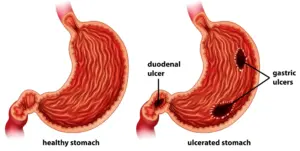
If left untreated, antral gastritis may lead to:
- Peptic ulcers[10]
- Gastrointestinal bleeding[11]
- Iron deficiency anemia
- Increased risk of gastric complications in chronic cases
Early diagnosis and treatment helps in improving outcomes.
Final Thoughts
Antral gastritis is more than just acidity or indigestion which requires immediate attention and care of individuals. It is a medically recognized inflammatory condition that affects the lower part of the stomach and may progress silently if ignored.
As this condition includes:
- Inflammation of the gastric mucosa
- Infectious or immune-related mechanisms
- Structural changes visible during endoscopic examination
With timely diagnosis, lifestyle changes, and appropriate treatment, most cases of antral gastritis can be effectively managed or reversed.
FAQs About Antral Gastritis
Q1.What is the main cause of antral gastritis?
The most common cause of antral gastritis is Helicobacter pylori infection, which triggers chronic inflammation in the antral region of the stomach.
Q2. Is antral gastritis serious?
Mild cases may not be serious, but untreated chronic antral gastritis can lead to ulcers, bleeding, and long-term complications, making early treatment important.
Q3. Can antral gastritis be cured?
Yes. In many cases, antral gastritis is treatable.
Q4. What are the common symptoms of antral gastritis?
Symptoms of antral gastritis are upper abdominal pain or burning, nausea, bloating, indigestion, and loss of appetite.
You can also read: The Bubble Gut Blueprint[12] – Learn why chronic bloating and abdominal distension happen and how to manage them.
References
We value truthful content. 12 sources were referenced during research to write this content.
- Suit, P. F., Petrini, J. L., Jr., Bauer, T. W., & Petras, R. E. (1987, October). Gastric Antral Vascular Ectasia. The American Journal of Surgical Pathology. Ovid Technologies (Wolters Kluwer Health). http://doi.org/10.1097/00000478-198710000-00002
- Li, J., Zhu, W., Liu, W., Wu, Y., & Wu, B. (2016, January). Rifaximin for Irritable Bowel Syndrome. Medicine. Ovid Technologies (Wolters Kluwer Health). http://doi.org/10.1097/md.0000000000002534
- Fernandes, T., Oliveira, M. I., Castro, R., Araújo, B., Viamonte, B., & Cunha, R. (2014, January 10). Bowel wall thickening at CT: simplifying the diagnosis. Insights into Imaging. Springer Science and Business Media LLC. http://doi.org/10.1007/s13244-013-0308-y
- Janssen, D. F. (2021, May 17). Who named and built the Désormeaux endoscope? The case of unacknowledged opticians Charles and Arthur Chevalier. Journal of Medical Biography. SAGE Publications. http://doi.org/10.1177/09677720211018975
- Martínez, L. E., O’Brien, V. P., Leverich, C. K., Knoblaugh, S. E., & Salama, N. R. (2019, July). Nonhelical Helicobacter pylori Mutants Show Altered Gland Colonization and Elicit Less Gastric Pathology than Helical Bacteria during Chronic Infection. (V. B. Young, Ed.), Infection and Immunity. American Society for Microbiology. http://doi.org/10.1128/iai.00904-18
- Eusebi, L. H., Black, C. J., Howden, C. W., & Ford, A. C. (2019, December 11). Effectiveness of management strategies for uninvestigated dyspepsia: systematic review and network meta-analysis. Bmj. BMJ. http://doi.org/10.1136/bmj.l6483
- Blaser, M. J. (1988, May 1). Type B Gastritis, Aging, and Campylobacter pylori. Archives of Internal Medicine. American Medical Association (AMA). http://doi.org/10.1001/archinte.1988.00380050027005
- Martinsen, T. C., Fossmark, R., & Waldum, H. L. (2019, November 29). The Phylogeny and Biological Function of Gastric Juice—Microbiological Consequences of Removing Gastric Acid. International Journal of Molecular Sciences. MDPI AG. http://doi.org/10.3390/ijms20236031
- McShane, A., Bath, J., Jaramillo, A. M., Ridley, C., Walsh, A. A., Evans, C. M., … Ribbeck, K. (2021, August). Mucus. Current Biology. Elsevier BV. http://doi.org/10.1016/j.cub.2021.06.093
- Najm, W. I. (2011, September). Peptic Ulcer Disease. Primary Care: Clinics in Office Practice. Elsevier BV. http://doi.org/10.1016/j.pop.2011.05.001
- Kim, B. S. M. (2014). Diagnosis of gastrointestinal bleeding: A practical guide for clinicians. World Journal of Gastrointestinal Pathophysiology. Baishideng Publishing Group Inc. http://doi.org/10.4291/wjgp.v5.i4.467
- Jesus, L. E. de ., Cestari, A. B. C. S. S., Filho, O. C. da S., Fernandes, M. A., & Firme, L. H. (2015, September). Aerofagia patológica: uma causa rara de distensão abdominal crônica. Revista Paulista de Pediatria. FapUNIFESP (SciELO). http://doi.org/10.1016/j.rpped.2015.01.003