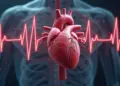
While hearing the word “arrhythmia” can be scary and make you fall into a dilemma. Many people think of sinus arrhythmia as serious heart problems, hospital visits, or long-term medication. But not all arrhythmias are dangerous. In fact, sinus arrhythmia is often a normal and healthy finding, especially in young people and children. If you or someone you know was told they have sinus arrhythmia after an ECG or routine check-up, this article will help you understand what it really means, why it happens, what symptoms to expect, and when treatment is or isn’t needed.
What Is Sinus Arrhythmia?
Sinus arrhythmia[1] means natural variation in heart rate that occurs even though the heart rhythm is still controlled by the heart’s normal pacemaker which is known as the sinus node. In simple terms:
- Your heart is beating from the right place
- The rhythm is normal
- But the timing between beats slightly changes
The most common type is respiratory sinus arrhythmia, where:
- Your heart beats a little faster when you breathe in
- Your heart beats a little slower when you breathe out
This happens automatically and unconsciously. You don’t control it, and most of the time, you don’t even feel it. According to NIH and NCBI[2], this is considered a normal physiological response, not a disease.
Let’s understand this by example:
Imagine you’re sitting calmly and taking slow and deep breaths. As you inhale the oxygen, your lungs expand and signals from your nervous system slightly reduce Vagus nerve[3] activity, causing your heart rate to rise. Similarly, as you exhale, the Vagus nerve becomes more active again, gently slowing the heart.
This back-and-forth pattern shows that your heart and lungs are communicating well. In fact, doctors often see sinus arrhythmia as a sign of a healthy, responsive heart, especially in younger individuals.
Why Does Sinus Arrhythmia Happen?
1. The Role of the Autonomic Nervous System
Your heart rate is influenced by the autonomic nervous system, which has two main parts: the sympathetic system[4] that makes the heart beat fast and the parasympathetic system[5] (vagus nerve) that makes the heart beat slow. Breathing changes the balance between these systems. This is the reason why sinus arrhythmia exists.
Medical studies by NIH-linked cardiology texts explain that respiratory sinus arrhythmia show strong vagal tone[6], which is often seen in:
- Children
- Young adults
- Athletes
- Physically fit individuals
2. Age and Fitness Level
Sometimes a 12 year old might show sinus arrhythmia on ECG, while a 65 year old may not but it does not mean that the child or the elderly person is not healthy. As they both can be healthy. Sinus arrhythmia is:
- Very common in children and teenagers
- Less noticeable with aging
- Often reduced in people with chronic illnesses
3. Non-Respiratory Causes
In rare situations, irregular sinus rhythm may be linked with:
- Certain heart conditions
- Increased intracranial pressure
- Medication effects
- Electrolyte imbalances
Symptoms: Do People Feel Sinus Arrhythmia?
Sometimes it becomes hard to identify the symptoms because most people feel nothing and begin their daily life normally. That is why this condition is often related to clinical finding. Meanwhile, Some people may notice:
- Mild awareness of heartbeat during deep breathing
- A feeling that the heart rhythm changes slightly
- Brief, harmless palpitations[7]
Symptoms That Are Not Typical
Sinus arrhythmia usually does not cause:
- Chest pain
- Severe dizziness
- Fainting
- Breathlessness at rest
If these symptoms are present, doctors look for other heart rhythm disorders, not sinus arrhythmia itself.
How Is Sinus Arrhythmia Diagnosed?
The sinus arrhythmia is not something that you can feel as it might look normal. That is why it is clinically diagnosed by Electrocardiogram (ECG / EKG[8]).
Doctors diagnose sinus arrhythmia using an ECG. The test shows:
- Normal sinus rhythm
- Slight variation in time between heartbeats
- Changes that often match breathing patterns
It is important to diagnose Sinus arrhythmia properly with the help of ECG to not confuse it with dangerous arrhythmia.
Is Further Testing Needed?
Usually, no additional tests are needed if:
- The patient is young or healthy
- There are no concerning symptoms
- The ECG pattern matches respiratory sinus arrhythmia
In rare cases, doctors may order:
Only if another heart issue is suspected.
Treatment: Does Sinus Arrhythmia Need to Be Fixed?
No treatment is required for normal respiratory sinus arrhythmia. Because it does not damage the heart, increases the risk of heart attack, and makes breathing impossible.
When Treatment Might Be Considered
- Treatment is not for sinus arrhythmia itself, but for:
- An underlying heart condition
- Another arrhythmia mistakenly labeled as sinus arrhythmia
- Contributing factors like electrolyte imbalance
When Should You See a Doctor?
Even though sinus arrhythmia is usually harmless, medical evaluation is important if you experience:
- Frequent fainting
- Severe chest pain
- Persistent dizziness
- Very slow or very fast heart rate unrelated to breathing
These symptoms may suggest a different heart rhythm issue that needs attention.
Final Thoughts
Sinus arrhythmia may sound alarming at first, especially because the word arrhythmia is often associated with serious heart problems. However, in most cases, sinus arrhythmia is simply a normal variation of a healthy heart rhythm.
For many people, especially children, young adults, and physically fit individuals, this slight change in heart rate during breathing is actually a sign that the heart and nervous system are working in harmony. It does not damage the heart, does not require treatment, and does not affect life expectancy. If symptoms such as fainting, chest pain, or persistent dizziness occur, they should never be ignored but those symptoms are typically related to conditions other than sinus arrhythmia itself. In short, sinus arrhythmia is most often a normal finding, not a diagnosis, and for the majority of people, it is nothing to fear.
Frequently Asked Questions (FAQs)
Q1. Is sinus arrhythmia dangerous?
No, as it does not increase the risk of heart disease or sudden cardiac events.
Q2. Can sinus arrhythmia go away on its own?
Yes. Sinus arrhythmia often becomes less noticeable with age. Many adults who had it as children no longer show it clearly on ECGs later in life.
Q3. Does sinus arrhythmia require medication?
No, it does not.
Q4. Can sinus arrhythmia cause palpitations?
Most people do not feel anything. However, some individuals may notice mild palpitations during deep breathing. These sensations are usually harmless when related to respiratory sinus arrhythmia.
You Can also read: CPTSD vs PTSD: Key Differences, Symptoms, Causes, and Treatment[11]
References
We value truthful content. 11 sources were referenced during research to write this content.
- Goldberger, A. L., Goldberger, Z. D., & Shvilkin, A. (2013). Sinus and Escape Rhythms. Goldberger's Clinical Electrocardiography. Elsevier. http://doi.org/10.1016/b978-0-323-08786-5.00013-0
- Kaushal, P., & Taylor, J. A. (2002, May). Inter-relations among declines in arterial distensibility, baroreflex function and respiratory sinus arrhythmia. Journal of the American College of Cardiology. Elsevier BV. http://doi.org/10.1016/s0735-1097(02)01787-4
- Hoffman, H. H., & Schnitzlein, H. N. (1961, March). The numbers of nerve fibers in the vagus nerve of man. The Anatomical Record. Wiley. http://doi.org/10.1002/ar.1091390312
- Scott-Solomon, E., Boehm, E., & Kuruvilla, R. (2021, October 1). The sympathetic nervous system in development and disease. Nature Reviews Neuroscience. Springer Science and Business Media LLC. http://doi.org/10.1038/s41583-021-00523-y
- McCorry, L. K. (2007, September). Physiology of the Autonomic Nervous System. American Journal of Pharmaceutical Education. Elsevier BV. http://doi.org/10.5688/aj710478
- BERNTSON, G. G., CACIOPPO, J. T., & QUIGLEY, K. S. (1993, March). Respiratory sinus arrhythmia: Autonomic origins, physiological mechanisms, and psychophysiological implications. Psychophysiology. Wiley. http://doi.org/10.1111/j.1469-8986.1993.tb01731.x
- Gharebaghi, R., Heidary, F., & Roghayeh Heidary. (2010, July). Palpation by blind examiners: A novel approach for glaucoma screening. Clinical Ophthalmology. Informa UK Limited. http://doi.org/10.2147/opth.s11167
- Lyakhov, P., Kiladze, M., & Lyakhova, U. (2021, August 5). System for Neural Network Determination of Atrial Fibrillation on ECG Signals with Wavelet-Based Preprocessing. Applied Sciences. MDPI AG. http://doi.org/10.3390/app11167213
- Su, L., Borov, S., & Zrenner, B. (2013, June). 12-lead Holter electrocardiography. Herzschrittmachertherapie + Elektrophysiologie. Springer Science and Business Media LLC. http://doi.org/10.1007/s00399-013-0268-4
- Cleve, J., & McCulloch, M. L. (2018). Conducting a Cardiac Ultrasound Examination. Echocardiography. Springer International Publishing. http://doi.org/10.1007/978-3-319-71617-6_2
- Bisson, J. I., Cosgrove, S., Lewis, C., & Roberts, N. P. (2015, November 26). Post-traumatic stress disorder. Bmj. BMJ. http://doi.org/10.1136/bmj.h6161