
You might have experienced chicken pox in childhood which is caused by varicella-zoster virus (VZV) which is the same virus responsible for Herpes zoster. Let’s understand it in simple words, when your chicken pox finally recovers completely, the virus still stays in for a longer period of time and can get activated when your immune system loses control. Shingles can happen to anyone so it’s important to understand how doctors diagnose varicella.
Clinical Diagnosis: The First and Most Important Step
1. Medical History
Medical history is helpful for doctors to examine the accurate reason for the virus and differentiate it, so there are few basic things that help them to make notes on the virus like:
- Recent contact with a person infected with chickenpox or shingles[1]
- Vaccination status
- Previous history of chickenpox
- Immune status (e.g., pregnancy, HIV, cancer, chemotherapy)
A history of sudden fever followed by a rash strongly signals toward varicella[2].
2. Physical Examination
Chickenpox has a noticeable rash which can be easily diagnosed clinically by doctors.
Key features doctors look for include:
- Top of itchy red spots that turns into fluid-filled blisters (vesicles)
- Lesions present in different stages at the same time (spots, blisters, crusts)
- Rash starting on the face, scalp, or trunk, then spreading to the rest of the body
- Associated symptoms such as fever, fatigue, headache, and body aches
When Is Laboratory Testing Needed?
Although most cases are diagnosed clinically, laboratory confirmation is recommended when:
- The rash looks different
- The patient is immunocompromised
- The infection occurs in adults or pregnant women
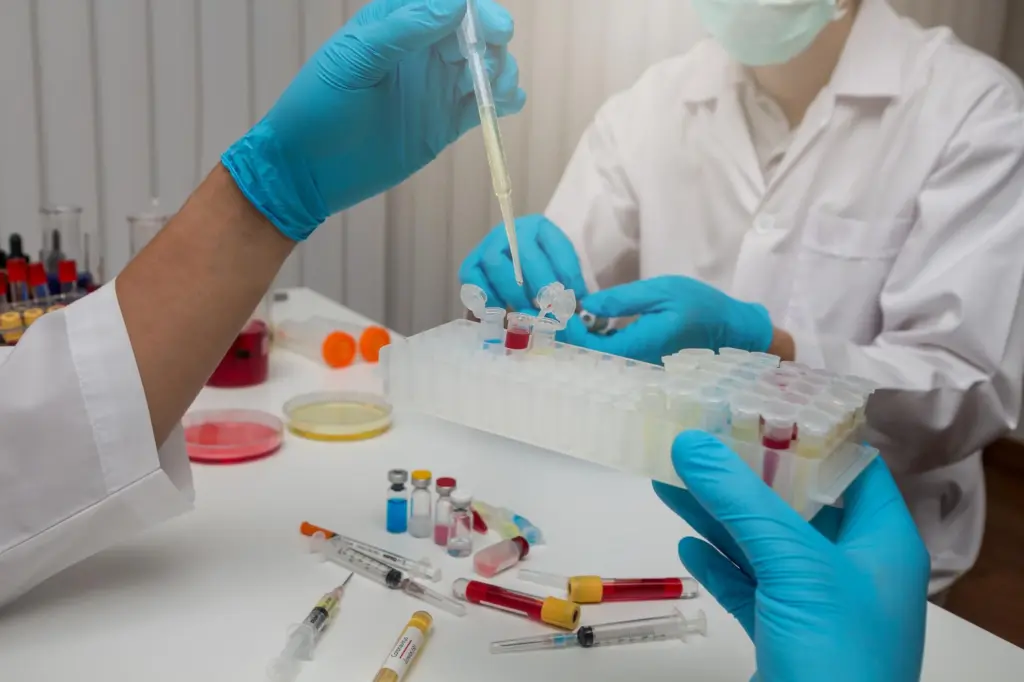
Laboratory Tests Used to Diagnose Chickenpox
1. Polymerase Chain Reaction (PCR) – Gold Standard
PCR testing[3] is the most sensitive and specific test for diagnosing varicella.
- Sample taken from blister fluid, scab, or lesion swab
- Provides rapid and accurate results
PCR is especially useful in severe cases and hospitalized patients.
2. Direct Fluorescent Antibody (DFA) Test
- Detects VZV[4] antigens from lesion samples
- Faster than viral culture
- Less sensitive than PCR but still useful in some settings
3. Serologic Testing (Blood Tests)
VZV IgM Antibodies
- Indicates recent or acute infection
- May be less reliable in vaccinated individuals
VZV IgG Antibodies
- Confirms past infection or immunity
- Useful for determining immune status in pregnant women or healthcare workers
4. Viral Culture (Rarely Used)
- Involves growing the virus from lesion samples
- Time-consuming and less sensitive
- Rarely used due to availability of faster tests
Differential Diagnosis: Conditions Doctors Rule Out
Doctors may need to differentiate chickenpox from:
- Herpes zoster (shingles)
- Herpes simplex[5] infection
- Hand-foot-and-mouth disease
- Allergic rashes
- Insect bites
The distribution, progression, and stage variation of chickenpox lesions help distinguish it from these conditions.
Chickenpox is caused by the varicella-zoster virus, which remains dormant in the body and can later reactivate as shingles. For detailed treatment options, read our complete guide on Herpes Zoster Treatment.[6]
Special Considerations in High-Risk Groups
Pregnant Women
- Serology[7] is often used to assess immunity
- Early diagnosis is critical to prevent fetal complications
Immunocompromised Patients
- PCR testing is strongly recommended
- Symptoms may be severe or atypical
Vaccinated Individuals
Breakthrough infections may show milder or fewer lesions, making lab confirmation helpful
Final Thoughts
In most cases, chickenpox is diagnosed through clinical examination and patient history. However, modern diagnostic tools such as PCR testing and serologic assays is very important in confirming varicella in complicated or high-risk cases.
You can also read: What’s the Difference Between HSV and Shingles?[8]
References
We value truthful content. 8 sources were referenced during research to write this content.
- Cohen, J. I. (2013, July 18). Herpes Zoster. (C. G. Solomon, Ed.), New England Journal of Medicine. Massachusetts Medical Society. http://doi.org/10.1056/nejmcp1302674
- (2012, April). Routine vaccination against chickenpox?. Drug and Therapeutics Bulletin. BMJ. http://doi.org/10.1136/dtb.2012.04.0098
- Saiki, R. K., Scharf, S., Faloona, F., Mullis, K. B., Horn, G. T., Erlich, H. A., & Arnheim, N. (1985, December 20). Enzymatic Amplification of β-Globin Genomic Sequences and Restriction Site Analysis for Diagnosis of Sickle Cell Anemia. Science. American Association for the Advancement of Science (AAAS). http://doi.org/10.1126/science.2999980
- Nagel, M. A., & Gilden, D. H. (2007, July 1). The protean neurologic manifestations of varicella-zoster virus infection. Cleveland Clinic Journal of Medicine. Cleveland Clinic Journal of Medicine. http://doi.org/10.3949/ccjm.74.7.489
- Balasubramaniam, R., Kuperstein, A. S., & Stoopler, E. T. (2014, April). Update on Oral Herpes Virus Infections. Dental Clinics of North America. Elsevier BV. http://doi.org/10.1016/j.cden.2013.12.001
- Nagel, M. A., & Gilden, D. H. (2007, July 1). The protean neurologic manifestations of varicella-zoster virus infection. Cleveland Clinic Journal of Medicine. Cleveland Clinic Journal of Medicine. http://doi.org/10.3949/ccjm.74.7.489
- Atmar, R. L. (2014). Immunological Detection and Characterization. Viral Infections of Humans. Springer US. http://doi.org/10.1007/978-1-4899-7448-8_3
- Chayavichitsilp, P., Buckwalter, J. V., Krakowski, A. C., & Friedlander, S. F. (2009, April 1). Herpes Simplex. Pediatrics In Review. American Academy of Pediatrics (AAP). http://doi.org/10.1542/pir.30.4.119